How to make a Coir Rope? Coir + cotton thread = Coir rope
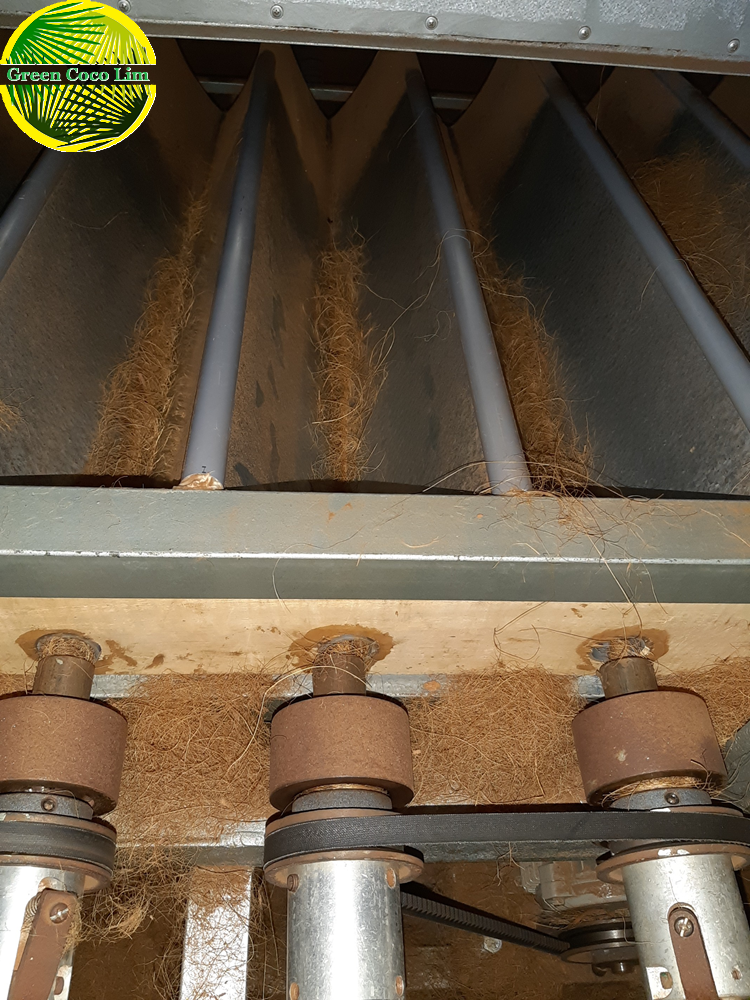
To make a coir rope, you first need to make a yarn.
Coconut fiber is needed to make a rope. High-quality coconut fiber is made by crushing carefully selected coconut shells. When the shells are crushed, they are separated into two types: coco peat and fiber.
When the fibers are fed into a machine, the coco peat and small fibers that are stuck are removed, and only good coconut fibers are selected.
The selected fibers are fed into a machine that makes yarn, and the machine has a central line called a ‘core’. This core rotates to make the coconut fibers into a rope.
Since this is an environmentally friendly product, nylon or PP products are never used as cores. Natural yarns such as cotton, jute, or bamboo must be used. This is very important in making a palm rope.
When it passes through this machine, it becomes a coir yarn that is 3-4mm thick and 1,000m long.
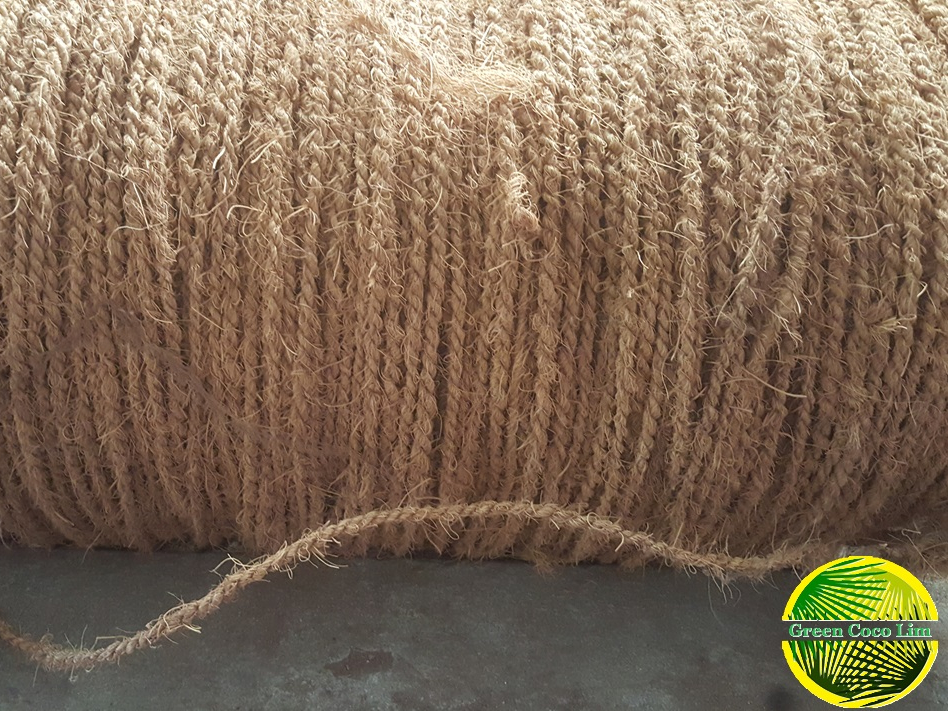
Usually, 8 rows of coir yarn are twisted to complete a standard palm rope with a thickness of 16-18 mm. Often, 13-14 mm palm ropes are made according to customer needs, but the strength and elasticity of the rope must be maintained.
How to adjust the thickness of the rope?
- You can adjust the thickness of the single-row yarn,
- or increase the number of rows twisted.
You can also lower the density and make it look bigger. It’s a trick. In this case, the rope and mat will be damaged quickly.
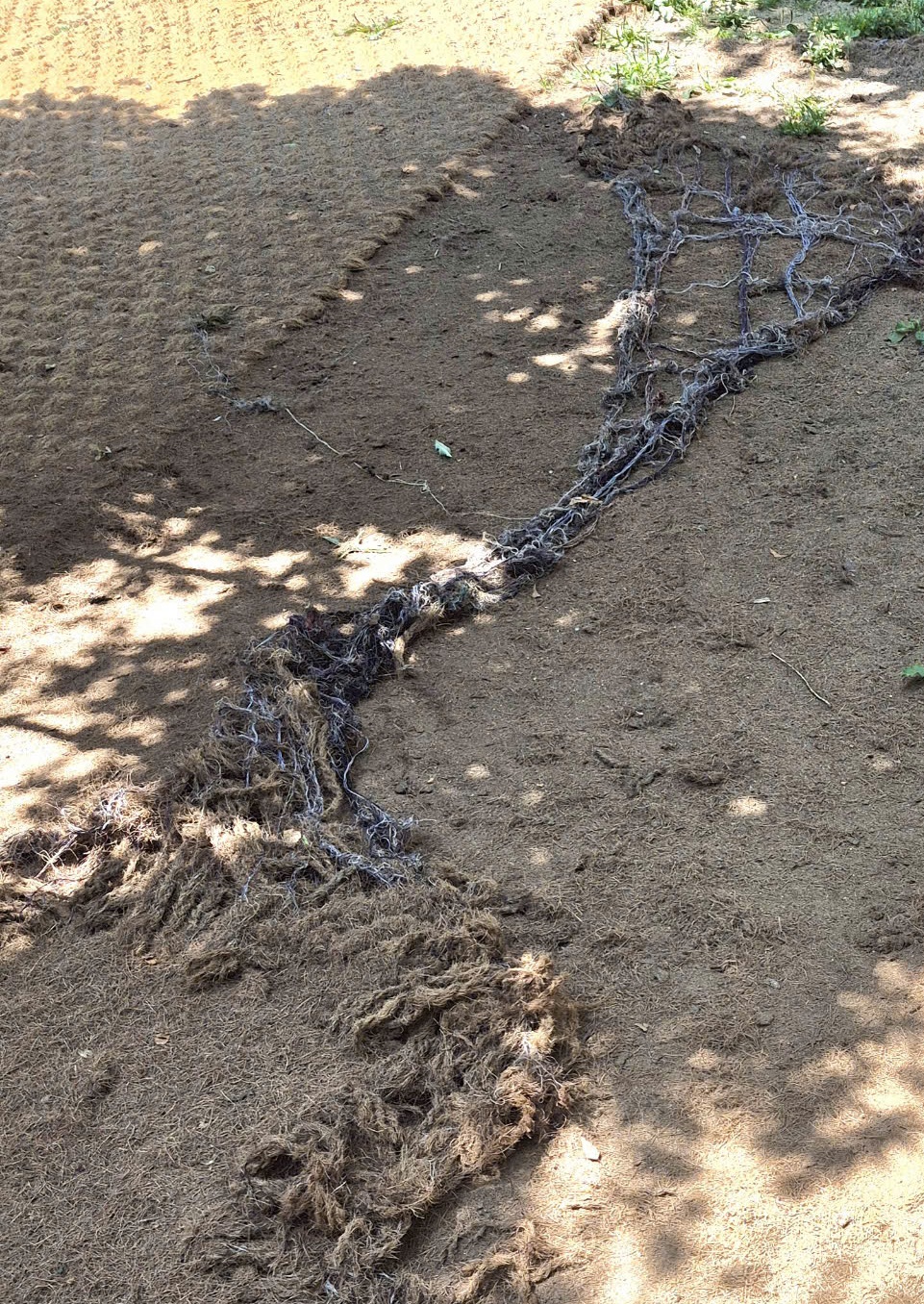
It’s not only unsightly, but it’s also not easy to handle. It’s also difficult to process.
This is a product that requires careful selection of the maker rather than just looking at it.
 Green Coco Lim Coir Mat